
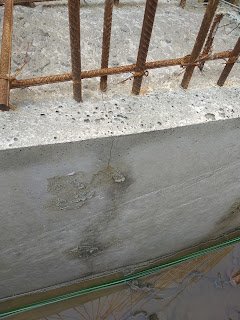
Crack on Concrete
Crack is a complete or
incomplete separation of concrete into more parts produced by breaking or
fracturing. Cracks are one kind of universal problems of concrete construction
as it affects the building and it also destroys the wall’s integrity, affected
the structure safety and even reduce the durability of structure.
incomplete separation of concrete into more parts produced by breaking or
fracturing. Cracks are one kind of universal problems of concrete construction
as it affects the building and it also destroys the wall’s integrity, affected
the structure safety and even reduce the durability of structure.
 |
| Cracks on Concrete |
Types of Cracks in
Structure
Structure
The cracks appear in the
structure, at a certain period of time. Most commonly used cracks with their
respective causes and precaution
structure, at a certain period of time. Most commonly used cracks with their
respective causes and precaution
1.
Shrinkage Cracks
Shrinkage Cracks
Concrete have its own
nature in dry or wet. They expand when they absorb water/moisture and shrink
when dray. Shrinkage cracks occur due to change in moisture of concrete mix. Drying
is the main cause of concrete shrinkage cracks.
nature in dry or wet. They expand when they absorb water/moisture and shrink
when dray. Shrinkage cracks occur due to change in moisture of concrete mix. Drying
is the main cause of concrete shrinkage cracks.
2.
Hairline Cracks
Hairline Cracks
Hairline cracks may
develop in concrete foundation as the concrete cures. Hairline cracks do not
cause problems with the stability of the foundation but do cause leakage
problems.
develop in concrete foundation as the concrete cures. Hairline cracks do not
cause problems with the stability of the foundation but do cause leakage
problems.
3.
Settlement Cracks
Settlement Cracks
Settlement cracks may
appear when the underlying ground has not been compacted or appropriately
prepared or if the soil was not of the proper consistency. A settlement crack
may also appear as a random crack above areas where the soil of the sub grade
was uneven after the concrete was poured.
appear when the underlying ground has not been compacted or appropriately
prepared or if the soil was not of the proper consistency. A settlement crack
may also appear as a random crack above areas where the soil of the sub grade
was uneven after the concrete was poured.
Major Causes of Cracks
Cracks can occur due to
various reasons chemical reactions in construction materials, foundation
movement and settling of structure, change in temperature and climate, environment
stresses like the nearby movement of transportation, earthquakes etc. Faulty
and defective designs, proper quality materials, incorrect methods of
construction, weather, and loads of wear and tear can create cracks.
various reasons chemical reactions in construction materials, foundation
movement and settling of structure, change in temperature and climate, environment
stresses like the nearby movement of transportation, earthquakes etc. Faulty
and defective designs, proper quality materials, incorrect methods of
construction, weather, and loads of wear and tear can create cracks.
1.
Initial Shrinkage
Initial Shrinkage
Building material like
brickwork, concrete etc. shrink in the beginning. Shrinkage Cracks on structure
when cement content increases with richness of mix, the water quantity used in
the mix, and the size of the aggregate.
brickwork, concrete etc. shrink in the beginning. Shrinkage Cracks on structure
when cement content increases with richness of mix, the water quantity used in
the mix, and the size of the aggregate.
2.
Thermal Movement
Thermal Movement
All building materials
expand on heat and contract on cooling. Thermal movement in the components of
structure creates cracks owing to tensile of shear stress. But again, the scale
of movement depends on their molecular structure and other properties. Thermal
Changes are on the strongest causes of cracks in structure and demand
attention.
expand on heat and contract on cooling. Thermal movement in the components of
structure creates cracks owing to tensile of shear stress. But again, the scale
of movement depends on their molecular structure and other properties. Thermal
Changes are on the strongest causes of cracks in structure and demand
attention.
3.
Chemical Reaction
Chemical Reaction
Chemical reaction in
materials increase their overall volume and internal stress which results in
cracks. The material used in construction weaken due to chemical Reactions.
materials increase their overall volume and internal stress which results in
cracks. The material used in construction weaken due to chemical Reactions.
4.
Foundation movement and settlement of soil
Foundation movement and settlement of soil
Shear cracks happen due to
huge deferential settlement in the foundation, structures constructed on soil whereas
absorbing moisture and shrink on drying due to change in moisture content of
the solid and highly prone to cracking.
huge deferential settlement in the foundation, structures constructed on soil whereas
absorbing moisture and shrink on drying due to change in moisture content of
the solid and highly prone to cracking.