
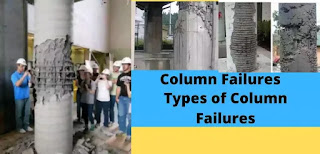
Types of Column Failure
 |
| column failures |
Column
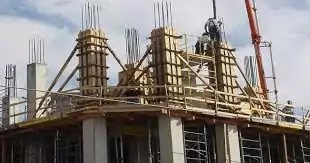
column
Columns are the most important parts of a structure.
They transfer loads of the structure to the Surrounding soil through the
foundation. So we need to build strong columns, otherwise, failure will occur. Columns are built with two building material, concrete and steel. Before designing
the columns, civil engineers should calculate total stress due to live and dead
load of the building. When the applied stress exceeds the permissible stress (calculated)
the structure will fail. So column play on of the main role for making or
developing any building infrastructure.
The column plays vital role for both present and future of the buildings.
So column failure are such things which directly impact the building as it may
lead to the destruction of the buildings.
Column Failure :
The failure of the most important parts of a structure which transfer loads of the structure to the Surrounding soil through the
foundation.
Types of the Column failure :
failure that matters a lot. They are Compression Failure and Buckling Failure.
1. Compression
failure
 |
|
| Compression failure |
When columns are axially loaded,
the concrete and steel will experience some stresses. When the loads are
greater in amount compared to the cross –sectional area of the column, the
concrete and steel will reach the yield stress and failure will be starting without
any later deformation. In this type of
failure, the material fails itself, not the whole column. This type of failure
mostly occurs in shorter and wider columns.
cross-sectional area compared to the allowable stress.
1 2. Buckling
failure
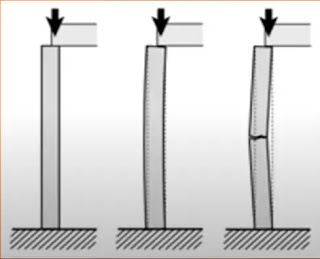
buckling failure

in long columns. Because they are very slender and their least lateral
dimension is greater than 12. In such condition, they load carrying capacity of
the column decreases very much. The column tend to become unstable and start
buckling to sideward even under small loads. That means the concrete and steel
reached their yields stress for even small loads and start failing due to
lateral buckling.
slenderness ration greater than 30.